Collier Schorr
New York City

The exciting image maker Collier Schorr cares about many things but answering expectations isn’t one of them. Moving from writing to collage into being one of the world’s most sought-after photographers in both the fields of both fashion and art, Collier keeps rolling on and now shockingly turns the eye of the camera on herself.
From Fantastic Man n° 25 – 2017
Text by CHARLIE PORTER
Photography by COLLIER SCHORR
The artist and photographer Collier Schorr is sitting in her studio in Brooklyn, New York City, the metropolis in which she was born in 1963. Her practice crosses between art, fashion editorial and commercial campaigns. Her work is in the collections of both MoMA and the Whitney Museum of American Art, while her most prominent current fashion campaign is for the first Saint Laurent collection by Anthony Vaccarello.
We are talking on the phone, and I ask her to describe her studio. “It is vast, and airy,” she says. “And I’m looking out of the window and I see gentrification all around me. But I don’t feel that bad about it because I’m gentrified as well.” Can a born-and-bred New Yorker gentrify her own city? “I was part of the first wave of gentrification in the East Village, because I was there in 1982,” she says. “It was fun gentrification. You could have a gay life in an art gallery and nightlife in a gay bar. Now I don’t think either of those things are there.”

Collier was born in Queens. “My father’s from the Bronx, my mother is from Far Rockaway,” she says, referring to a neighbourhood the other side of JFK Airport. “My great-grandfather built a lot of houses there, as well as the synagogue.”
Her career in looking began in childhood. “When I was a kid, I’d cut out pictures in magazines and hang them on my walls in very installational ways,” she says. “There’d be gangs of pictures based on a brand, or a model, or a singer. They’d be like a false landscape, so I would have something to look at besides conservative, upper-middleclass suburbia. I think they set up for me a hamster wheel of being satisfied by looking.”
Fashion was of vital importance to her. “Advertising really said to me that these women existed somewhere else,” she says. “And it said these clothes could disguise you, allowing you to be these things that you’re not. I wanted the clothes, I wanted the women and I looked at the pictures.”
At the time, she was set on a different career path. “I remember telling my mother I wanted to be a photographer, but that was a complete lie,” she says. “I had no aspiration of that whatsoever. I thought I’d be a writer.”
Initially, she pursued that ambition, becoming an art critic for publications including ‘Artforum’ and ‘Frieze’, while also exhibiting appropriated collages at 303 Gallery in New York City, which still represents her. For much of the ’90s, she worked as US editor of ‘Frieze’. “When I used to review a show that I really liked or write about an artist, I felt nobody could love Sarah Lucas as much as I do. I always see myself as beta to an alpha subject.”
Exploration of gender is central to Collier’s work, though when she began there were few queer female cultural voices. “Nobody was overtly queer as a woman,” she says. “Fran Lebowitz was heavily invested in gay male literature and lifestyle because it was the lifestyle of success and beauty. Susan Sontag wasn’t out in her professional or social world. The legacy is rough.” Her first exhibition was in 1988; she first exhibited at 303 Gallery in 1991. “I had collectors saying, ‘I didn’t realise you were gay.’ I just assumed it was obvious, that my clothes were doing the talking. There was a reason I was wearing that suit jacket that was three sizes too big.”
Initially she didn’t take photographs of women. Her early photography work was mainly of young boys. “The breakthrough was shooting Freja for i-D,” she says, referring to the model Freja Beha Erichsen, whom she first shot in 2009. “It was the first time I was able to express desire and attraction in a photograph with a woman who was able to receive the gaze and to respond.”
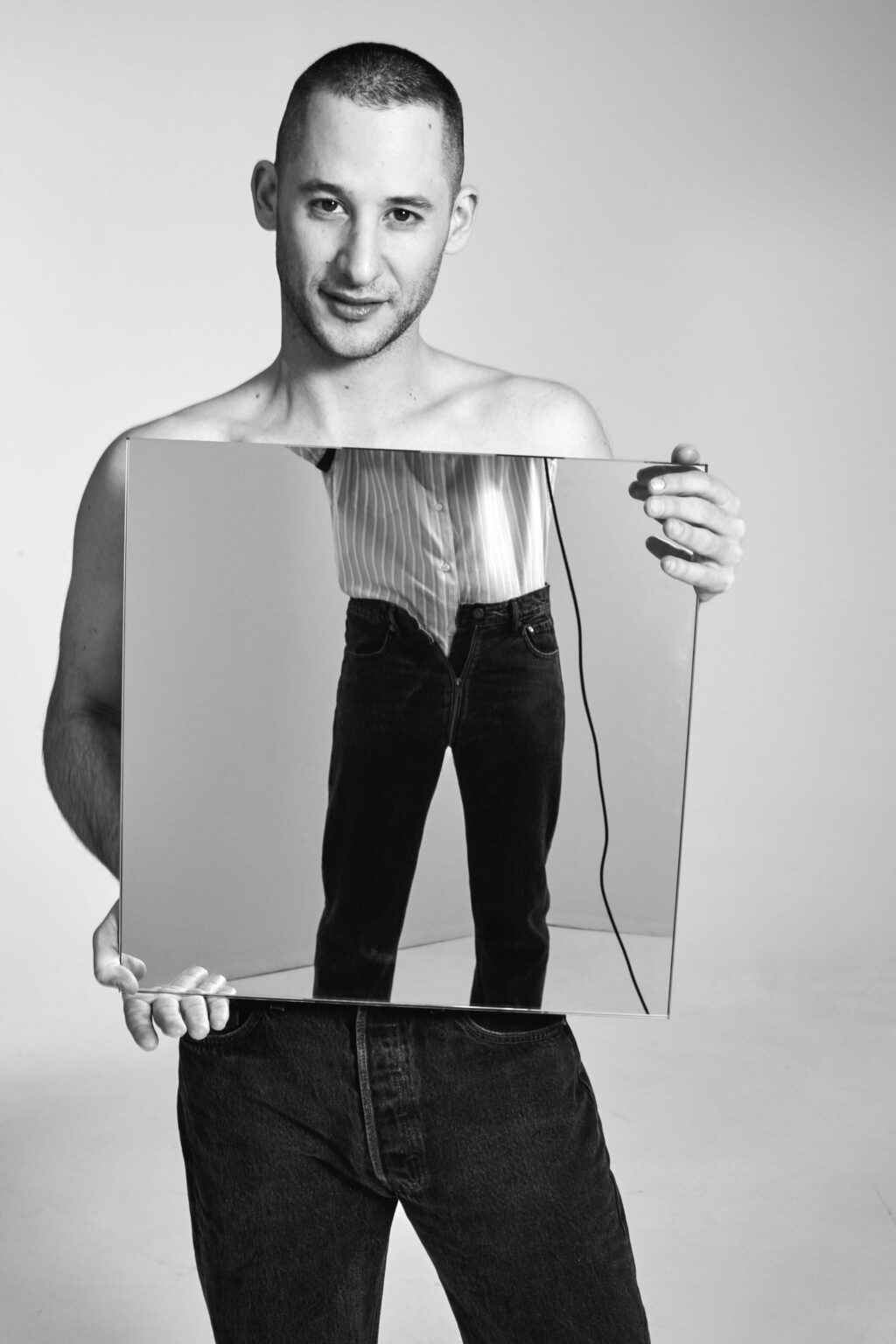
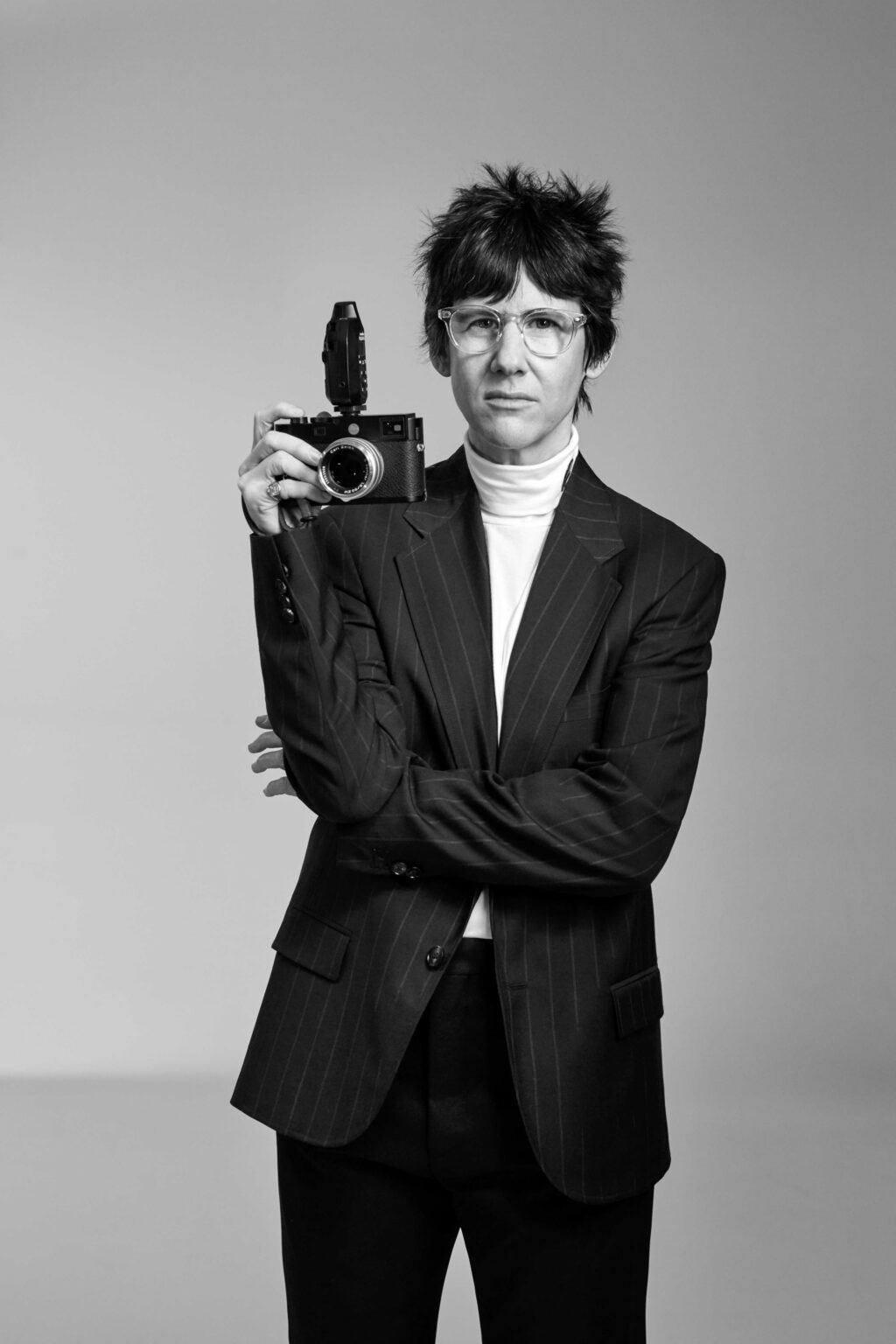
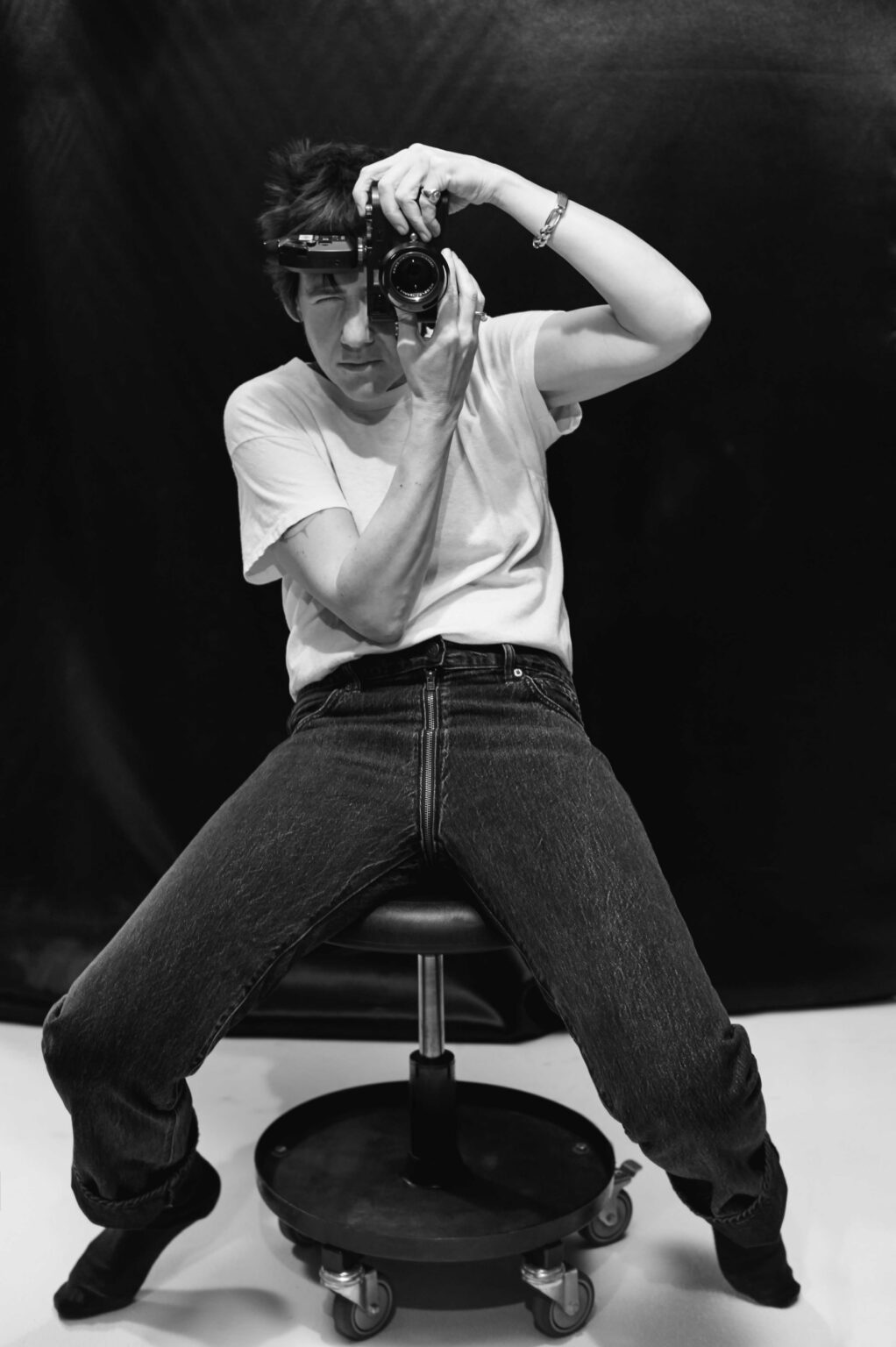
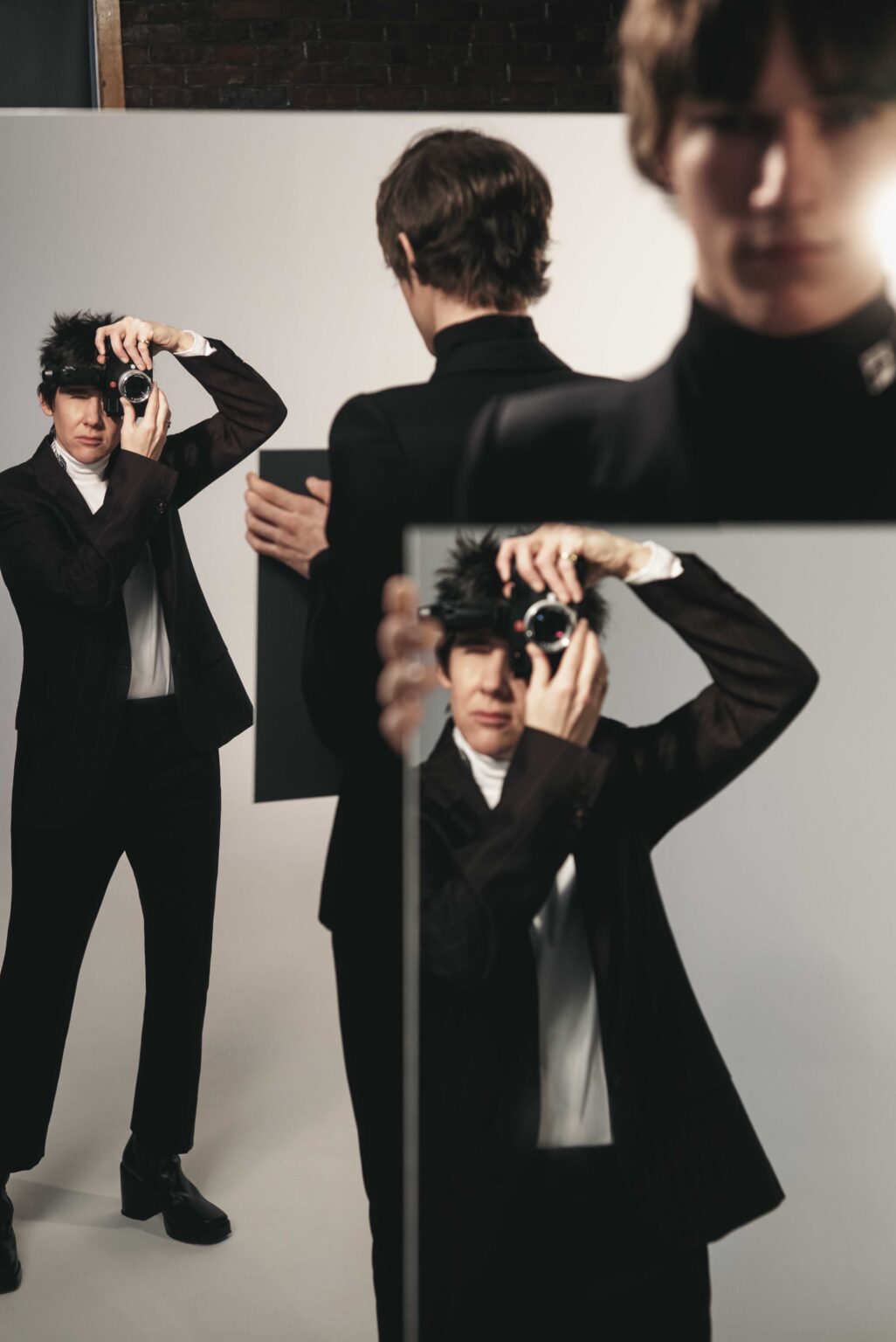
The idea of self-portraiture, like the images seen in these pages, was an even further remove for Collier. “I avoided it forever,” she says. “I couldn’t be Robert Mapplethorpe, and I couldn’t be Cindy Sherman, because I was neither a man nor a woman. I was never supposed to be in front. I was always supposed to be behind the camera.”
As she talks, she uses the word “handsome” in reference to women. “I’ve always been such an admirer of handsome women: Sophie Hicks. So handsome. Sadie Coles. Such a handsome woman.” Is she aware of her own handsomeness? “My voice is completely feminine, and so are my gestures. But I look at these pictures and think I’ve never looked so much like a guy in my life.”
She continues: “I never go into something thinking, ‘I can make an art show from this.’ When I did these pictures for Fantastic Man, I had no such thought. Then when I saw the pictures afterwards, I thought, ‘Oh.’ Standing in Balenciaga men’s high-heeled boots for ten hours fucked the shit out of my body, and I earned every single one of these pictures. I might as well traipse through Germany for a month in August with a knapsack of cameras on my back,” she says, referring to her landmark photographic series of German flowers titled ‘Blumen’. “It’s the same result.”


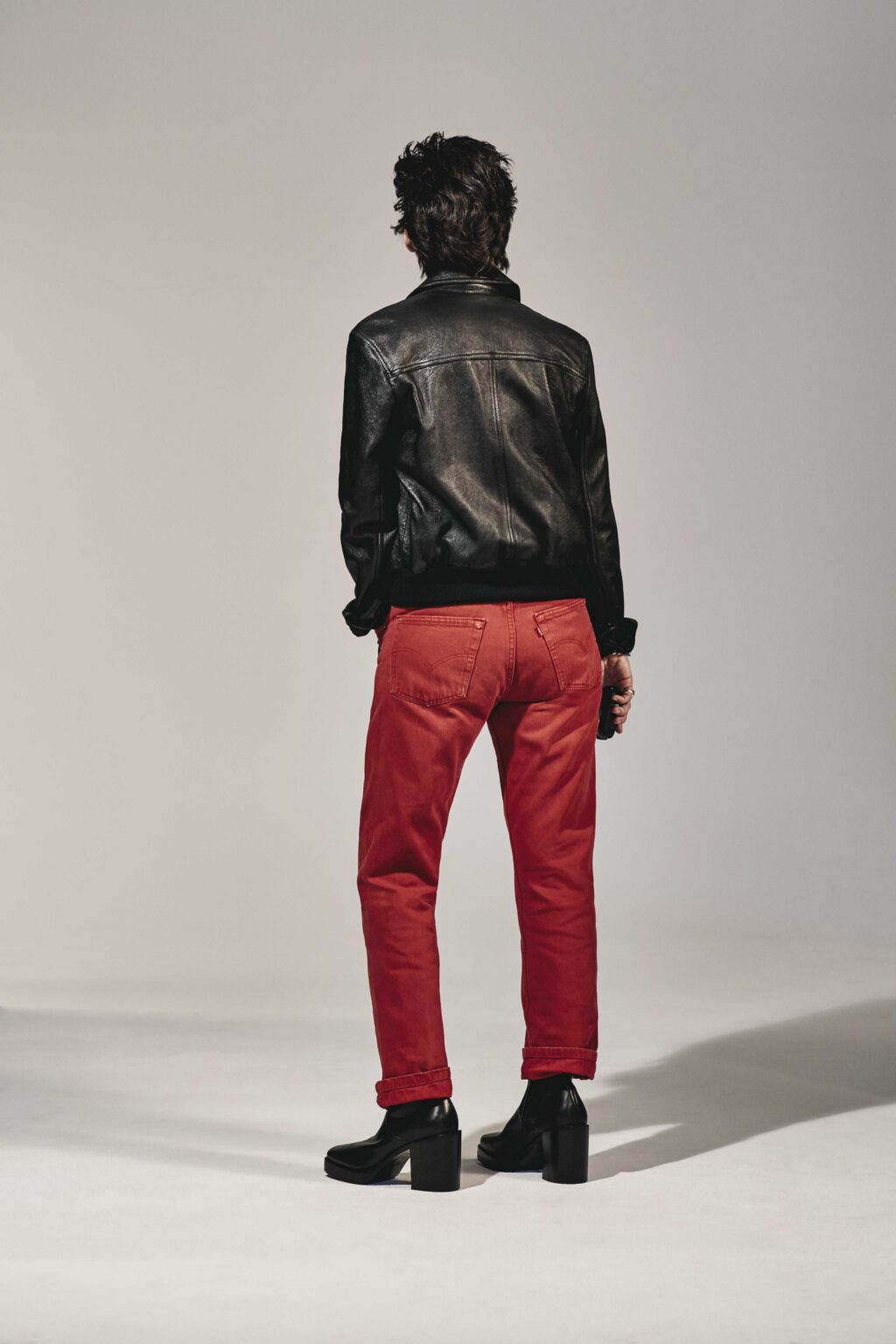

Photographic assistance by Max Dworkin and Jeff Rose. Digital operator: Jon Ervin. Styling assistance by Giulio Ventisei, Adam Smith Perez, Cruz Valdez and Nirja Ram. Hair by Holli Smith. Make-up by Kanako Takase. Set Design by Kadu Lennox Models: Collier Schorr, Jordan Wolfson and Nikolas Claes at Rebel Management. Production by Artist Commissions and Lauren Stocker.